
Looking for a non-surgical option? See our Laser Vaginal Rejuvenation page — suitability is decided at examination.
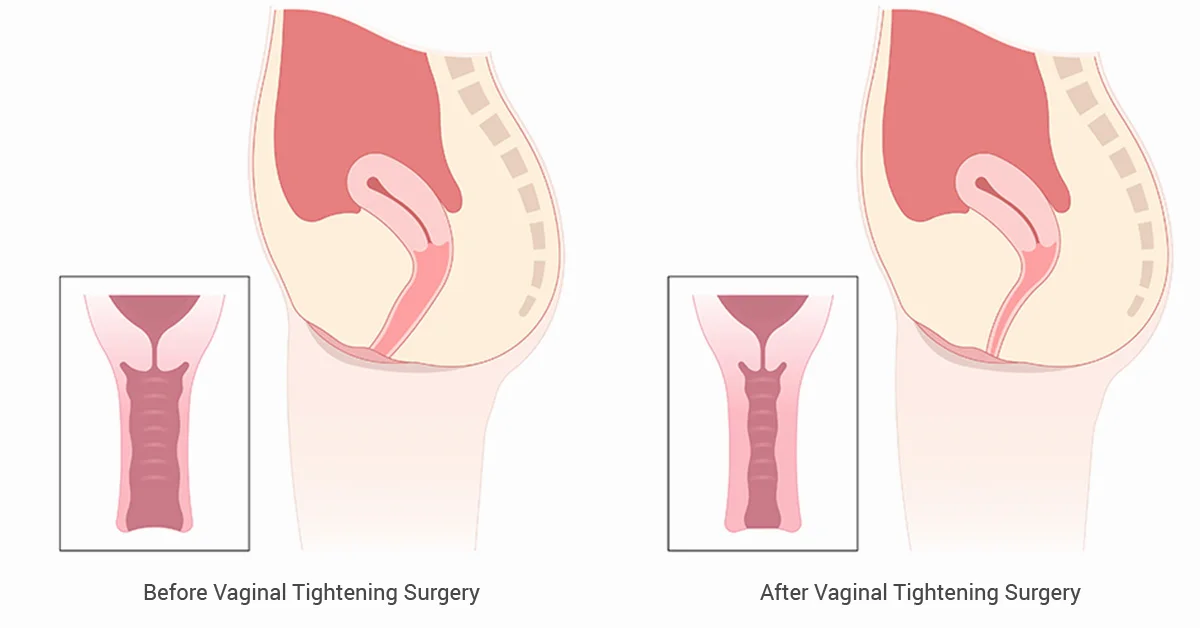
Vaginal enlargement commonly occurs as women age, particularly following pregnancy and vaginal delivery. This condition can affect sexual satisfaction and increase susceptibility to vaginal infections. Many women experience symptoms such as vaginal air escape during intercourse. Vaginoplasty addresses these concerns through surgical intervention.
The vagina typically measures approximately 9 centimeters in length, though normal variation ranges from 8 to 10 centimeters. Laxity develops frequently during menopause and after vaginal births. Estrogen, actively secreted during reproductive years, maintains strength in pelvic muscles and connective tissues. Following menopause, declining hormone levels weaken these structures. Childbirth similarly causes stretching and relaxation of vaginal tissues.
Surgical Procedure
Vaginoplasty is performed under anesthesia in a surgical setting. Mild pain and bleeding may occur postoperatively. Proper wound care and medication compliance support healing. Most patients return to daily life within 5–7 days. Patients should avoid strenuous exercise for 6 weeks, refrain from swimming or sea bathing, eliminate smoking and alcohol, maintain hydration, and wait 6–8 weeks before resuming sexual intercourse.
Impact on Intimacy
Vaginal widening prevents adequate penile contact during intercourse, reducing sexual satisfaction. Couples frequently report diminished intimacy following vaginal delivery.
Laser Alternative
Laser vaginal tightening offers non-surgical rejuvenation without incisions or anesthesia. Laser energy stimulates tissue regeneration and tightening; however, it is not suitable for moderate or severe laxity, and whether it is appropriate for you is decided at examination.
How the operation is done
Vaginal tightening surgery is carried out in the operating theatres of our partner JCI-accredited hospital, always under general anaesthesia. It usually takes more than 90 minutes, depending on how much repair is needed and whether other procedures are done at the same time. Our two surgeons operate together; Dr. Meryem Gökkaya Uçarer leads our genital aesthetic care.
The operation is closely related to what gynaecologists call a posterior vaginal wall repair, combined with a repair of the perineum (perineoplasty). In most women it involves these steps:
- Planning the new width. Before starting, the surgeon agrees with you, and then checks during the operation, how far the canal and the entrance will be narrowed. The aim is a comfortable, functional result. Making the vagina too narrow can cause pain with intercourse, so the narrowing is deliberately measured.
- Repairing the back wall. An incision is made along the back wall of the vagina. Stretched supporting tissue beneath the lining is brought together with stitches, and excess lining is trimmed.
- Rebuilding the entrance. The muscles of the perineal body, which are often separated after childbirth, are repaired, and the skin at the back of the vaginal opening is reshaped.
- Closing. The lining and skin are closed with dissolvable stitches.
The repair uses your own tissues; synthetic mesh is not used for this operation. You will be asked not to eat or drink for six hours before your appointment time. Depending on the extent of surgery and how you feel afterwards, you may go home the same day or stay one night in hospital. A urinary catheter, and sometimes a soft vaginal pack, may be left in place for a few hours after surgery.
Who it may suit, and who should wait
Vaginal tightening surgery is considered for adult women (18 and over) with a lasting feeling of looseness or wideness, most often after vaginal birth. It is generally better to wait, or to consider another option, if:
- your family is not complete: a later vaginal birth can stretch the repair again, which is why we usually advise waiting
- you gave birth recently: we suggest waiting at least six months after birth and until breastfeeding has stopped
- your main symptom is a bulge, heaviness, bladder leakage or difficulty emptying the bowel, which may point to pelvic organ prolapse or incontinence and needs a different assessment
- laxity is mild, in which case pelvic floor exercises with a specialist physiotherapist, or a non-surgical option, may be tried first
- you have an active infection, uncontrolled diabetes, a bleeding disorder, or you smoke and cannot stop around surgery
Recovery, day by day
Day 1. You wake up in the recovery area with soreness and swelling at the entrance. Painkillers are given regularly. If a catheter or pack was used, it is usually removed within hours, before you leave. Short walks start the same day to help circulation.
Days 2 to 7. Swelling usually peaks around the second or third day. Some bleeding or brownish discharge is normal for several weeks as stitches dissolve. Use pads, not tampons. A short lukewarm shower is generally possible from the first or second day; rinse after using the toilet and pat dry. Avoiding constipation is important: drink plenty of water, eat fibre and use the stool softener you are given, so that you do not strain. Light daily activities usually resume within five to seven days.
Week 2. Discomfort lessens and sitting becomes easier. Most women return to desk work after about two weeks; jobs that involve lifting or long periods on your feet may need longer.
Weeks 4 to 6. The wound is healing well. Avoid heavy lifting and strenuous exercise for six weeks. Swimming, baths and the sea are avoided until healing is complete, usually around four to six weeks.
Weeks 6 to 8 and month 3. Intercourse is usually resumed after six to eight weeks, once the repair has been checked. Go gently at first and use a water-based lubricant; tightness or tenderness in the first weeks is common. Remaining swelling settles, and the result is judged at around three months.
Everyday activities: when can I…?
| Activity | Usual timing |
|---|---|
| Short shower | From day 1–2 |
| Light daily activities | Within 5–7 days |
| Desk work | Around 2 weeks |
| Bath, swimming pool, sea | After full healing, usually 4–6 weeks |
| Heavy lifting, gym, running | After 6 weeks |
| Cycling, horse riding | After 6 weeks |
| Intercourse, tampons, menstrual cup | After 6–8 weeks, after a check |
These are general guides. Your surgeon may adjust them for you.
Risks, plainly
- Pain and swelling: expected in the early weeks.
- Bleeding or haematoma: a collection of blood may occasionally need draining.
- Infection: usually treated with antibiotics.
- Wound breakdown: part of the wound may open, especially with straining; most heal with care.
- Pain with intercourse: the most important long-term risk. It can happen if the vagina is narrowed too much or the scar is tender. Careful, measured narrowing reduces the risk but cannot remove it.
- Difficulty passing urine: temporary difficulty is not unusual in the first day.
- Constipation: common in the first days; prevented with fluids, fibre and stool softeners.
- Rare complications: injury to the bowel or bladder is rare but serious. Anaesthesia carries its own risks, and blood clots in the legs are taken seriously, especially when you will be flying home.
- Result not as hoped: the feeling of looseness may not be fully resolved, or may return with age or a later birth.
What the evidence says. Repair of the back wall of the vagina through the vagina is a well-established gynaecological operation for prolapse, and a Cochrane review supports the vaginal route over other approaches for that indication. For the purpose of tightening alone, however, good-quality research is limited. The American College of Obstetricians and Gynecologists states that there is not enough evidence to judge the effectiveness of so-called “vaginal rejuvenation” procedures, and advises that women be told this. We share that view and do not promise any change in sexual function.
Pregnancy and childbirth afterwards
The operation does not affect fertility. However, a later vaginal birth may stretch or tear the repaired tissues and undo some or all of the result. This is the main reason we advise waiting until your family is complete.
If you do become pregnant after the operation, tell your midwife or obstetrician that you have had vaginal and perineal surgery. Whether a vaginal birth or a caesarean is better for you is a decision for you and your obstetric team. Wait until healing is complete, usually at least three months, before trying to conceive.
Travel: how long to stay in Istanbul
Our genital aesthetic plan is built around a stay of seven nights in Istanbul, which covers the consultation, the operation and a check before you travel. Full recovery takes six to eight weeks, most of it at home.
- If your flight to Istanbul is longer than six hours, we do not plan a non-urgent procedure on the day you arrive. You are examined the next day and the operation goes ahead then if everything is suitable.
- Most women fly home after their check, about a week after surgery.
- After general anaesthesia and pelvic surgery, the risk of blood clots is taken seriously. On the flight, walk regularly, drink water, avoid alcohol and wear compression stockings or use the preventive treatment your surgeon advises. An aisle seat and a soft cushion help.
- Keep stool softeners, painkillers and pads in your hand luggage.
Your dates are confirmed after consultation.
Combining it with other procedures
- Perineoplasty: in practice, tightening surgery nearly always includes a repair of the entrance, as described above.
- Labiaplasty or hood reduction: can be done in the same operation when the inner lips are also a concern.
Combining procedures means one anaesthetic and one recovery, but a longer operation and more swelling. If you smoke, have diabetes or a clotting problem, or the planned surgery would be very long, staging may be safer.
Sources
Accessed 19.11.2026.
- Mowat A, Maher D, Baessler K, Christmann-Schmid C, Haya N, Maher C. Surgery for women with posterior compartment prolapse. Cochrane Database Syst Rev 2018;3:CD012975. doi:10.1002/14651858.CD012975
- American College of Obstetricians and Gynecologists. Elective Female Genital Cosmetic Surgery. ACOG Committee Opinion No. 795. Committee Opinion Summary, Obstet Gynecol 2020;135(1):249–250. doi:10.1097/AOG.0000000000003617
- Hamori CA. Aesthetic surgery of the female genitalia: labiaplasty and beyond. Plast Reconstr Surg 2014;134(4):661–673. doi:10.1097/PRS.0000000000000516
Prices
- General anesthesia — €2,690
Surgical prices include consultation, anesthesia, pre-operative tests and the procedure.
Our medical prices are fixed; your exact, all-inclusive price is confirmed in writing after your consultation. See our full price list →
Contact UCARER Women’s Health to book your consultation.