
Skip to content
Frozen Embryo Transfer (FET)
IVF

Frozen Embryo Transfer (FET)

Specialist physician: Assist. Prof. Dr. Muzaffer Uçarer — Obstetrics & Gynaecology · IVF and Reproductive Medicine  ·  Last updated: August 2026
This page provides general information and does not replace a medical consultation. Please consult your physician about your individual situation.

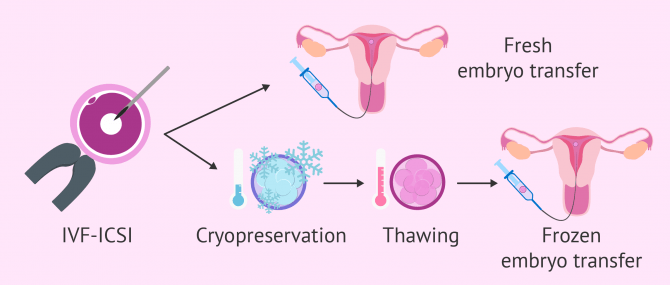
Frozen Embryo Transfer (FET) is the process by which embryos previously cryopreserved during an IVF cycle are thawed and transferred to the uterus in a subsequent cycle. FET offers couples an additional opportunity to achieve pregnancy from a single egg collection — without repeating the full stimulation process.

Why Choose FET?

FET is recommended when good-quality embryos remain following a fresh transfer, when the fresh cycle was cancelled due to OHSS or endometrial issues, or when a couple wishes to extend their family at a later date.

The FET Process

The endometrium is prepared either naturally or with hormone support. Once the lining reaches optimal thickness (typically 7mm+), the embryo is thawed, assessed for viability, and transferred under ultrasound guidance using a fine catheter. The procedure takes 15–20 minutes and requires no anaesthesia.

Success Rates

In a well-equipped laboratory, 75–80% of frozen embryos survive thawing. Pregnancy rates from FET are comparable to — and in some cases exceed — those from fresh transfers, as the uterine environment is often more receptive following a rest cycle.

Prices

  • Within 1 year of freezing — €900
  • After 1 year — €1,750

Our medical prices are fixed; your exact, all-inclusive price is confirmed in writing after your consultation. See our full price list →

Contact UCARER Women’s Health to book your consultation with Assist. Prof. Dr. Muzaffer Uçarer.

Explore More

Frequently Asked Questions

Common Questions

Under Turkish legal regulations, embryos may be stored for up to 5 years. An annual storage fee applies from the second year onwards. Vitrification maintains embryo quality throughout the storage period.

Pregnancy rates from FET are comparable to fresh transfers — and in many cases higher, as the uterine lining is undisturbed by stimulation medications, creating a more natural receptive environment.

Preparation can follow a natural cycle (relying on the body's own ovulation) or a medicated cycle using oestrogen and progesterone supplementation. Assist. Prof. Dr. Muzaffer Uu00e7arer selects the best protocol based on each patient's individual hormonal profile and history.

The transfer itself is a gentle, 15–20 minute procedure performed without anaesthesia. It is similar to a smear test — most patients experience no significant discomfort.

In a well-equipped laboratory, 75–80% of vitrified embryos survive thawing. If an embryo does not survive, this is discussed openly and all remaining options — including further stimulation if needed — are reviewed together.

Book Your Appointment Today

We provide a comfortable environment where you can consult us with all your problems in the field of Obstetrics, Gynecology and IVF Treatment.

Book Now Chat on WhatsApp