
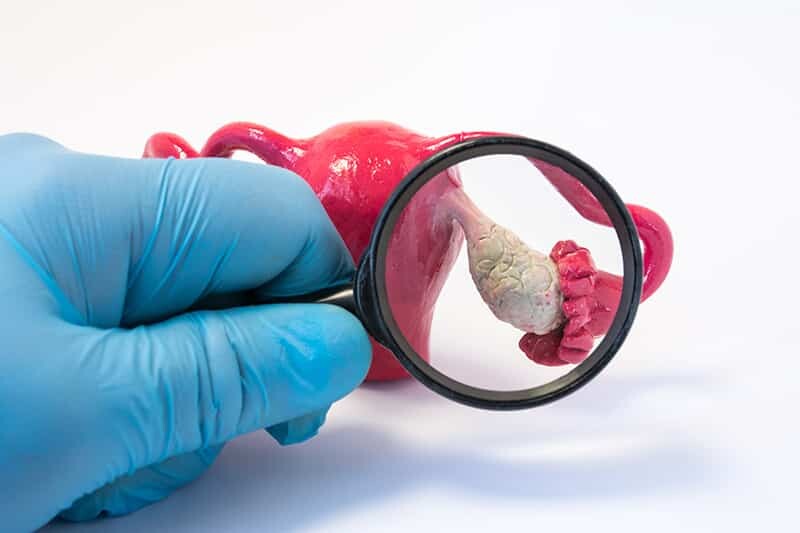
A cyst is a small, fluid-filled sac that can develop on your ovary. Although ovarian cysts are usually harmless, you may require treatment if cysts are causing pain or other symptoms.
What Causes Ovarian Cysts
Ovarian cysts come in two different forms. The most common type are functional ovarian cysts, which happen as part of the menstrual cycle as follicles prepare to release eggs for fertilisation. A follicle that doesn’t mature properly can swell and become a cyst. Functional cysts are usually harmless and disappear by themselves.
Pathological ovarian cysts happen when cells in the ovaries start to grow abnormally. Pathological cysts are rare, but there is a risk that they could become cancerous so they may need to be removed.
Symptoms of Ovarian Cysts
Most ovarian cysts are small and harmless. You might not know that you have a cyst unless it bursts or grows large enough to affect the blood supply to your ovaries. If this happens, you could experience pelvic pain, discomfort during sex, changes to menstrual cycles, bloating, increased urination frequency, or difficulty emptying bowels.
Diagnosing Ovarian Cysts
The gynaecologist may ask about symptoms, arrange an ultrasound scan to visualize cysts, and carry out a blood test to measure chemical levels. In rare cases, additional tests may be needed to exclude ovarian cancer.
Treatments for Ovarian Cysts
Treatment options include monitoring with regular ultrasounds if symptoms are absent, surgical removal for symptomatic or potentially cancerous cysts, and treatment of underlying conditions such as endometriosis or polycystic ovary syndrome.
Prices
- Open surgery — €3,000–3,500
- Laparoscopic — €3,500–4,000
Surgical prices include consultation, anesthesia, pre-operative tests and the procedure.
Our medical prices are fixed; your exact, all-inclusive price is confirmed in writing after your consultation. See our full price list →
Contact UCARER Women’s Health to book your consultation with Assist. Prof. Dr. Muzaffer Uçarer.